

















Reformer Pilates: A Comprehensive Guide
1. Introduction to Reformer Pilates
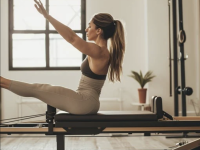
Reformer Pilates is a form of Pilates that utilizes a specialized piece of equipment known as the Pilates Reformer. It was developed by Joseph Pilates, a German physical trainer, in the early 20th century. Unlike mat Pilates, which relies solely on body weight and gravity, Reformer Pilates incorporates resistance provided by springs, pulleys, and the user’s own body weight on a sliding carriage system.
2. The Pilates Reformer Machine: Key Components
The Reformer machine consists of:
-
Carriage: A flat platform on which the user lies, sits, kneels, or stands. It slides back and forth on rails.
-
Springs: Attachments that provide variable resistance; they can be adjusted to increase or decrease tension.
-
Footbar: A bar at the front of the reformer used for foot or hand placement.
-
Shoulder blocks: Help keep the user stable on the carriage during movements.
-
Headrest: Adjustable for comfort and neck alignment.
-
Straps & Ropes: Pulley system for arm and leg exercises, typically with handles or loops.
3. Principles of Reformer Pilates
The foundational principles of all Pilates, including Reformer Pilates, are:
-
Concentration – Mindful engagement in every movement.
-
Control – Precision and smoothness of movement.
-
Centering – Core engagement, often referred to as the “powerhouse.”
-
Flow – Continuous, graceful movements.
-
Precision – Accuracy in each movement pattern.
-
Breath – Coordinated breathing with movement.
4. Benefits of Reformer Pilates
a. Physical Benefits
-
Improved core strength and stability
-
Enhanced flexibility
-
Better posture and spinal alignment
-
Increased muscular strength and endurance, especially in underused muscle groups
-
Greater balance and coordination
-
Improved joint mobility
-
Rehabilitation support for injuries, especially for the spine, knees, hips, and shoulders
b. Mental Benefits
-
Stress relief and mental clarity
-
Enhanced body awareness
-
Improved focus and concentration
c. Functional & Athletic Benefits
-
Injury prevention
-
Better performance in sports and physical activities
-
Improved movement efficiency
5. Common Reformer Pilates Exercises
Some foundational exercises include:
-
Footwork – Basic leg press series while lying down.
-
Leg Circles & Frogs – Hip mobility and stability.
-
Hundred – Core activation while using straps.
-
Short Spine Stretch – Spinal articulation and hamstring stretch.
-
Long Stretch Series – Advanced full-body integration.
-
Elephant – Hamstring stretch and core control.
-
Knee Stretches – Coordination and core control.
-
Stomach Massage – Core and spinal mobility.
-
Side Splits – Inner and outer thigh engagement.
6. Who Can Benefit from Reformer Pilates?
Reformer Pilates is highly versatile and adaptable, making it suitable for:
-
Beginners to advanced exercisers
-
Seniors seeking low-impact fitness
-
Athletes looking for improved performance and injury prevention
-
Post-rehabilitation patients (under guidance)
-
Pregnant women (prenatal and postnatal programs, with modifications)
-
People with chronic pain, especially lower back issues
7. Reformer vs. Mat Pilates
| Feature | Reformer Pilates | Mat Pilates |
|---|---|---|
| Equipment | Uses a reformer machine | No equipment or small props |
| Resistance | Provided by springs and pulleys | Body weight and gravity |
| Difficulty | Often more complex or challenging | More accessible for beginners |
| Customization | Easier to modify for injury | Less support for specific conditions |
| Focus | Strength, alignment, rehab | Core strength, flexibility |
8. Safety and Considerations
-
Get proper instruction: Especially for beginners or those with health issues.
-
Start slow: Begin with foundational exercises and build up.
-
Inform your instructor: Share any injuries or physical conditions.
-
Form over speed: Emphasize precision and control.
-
Use certified instructors: Choose instructors certified by reputable organizations such as STOTT Pilates, BASI Pilates, or Balanced Body.
9. Reformer Pilates for Special Populations
-
Pregnancy: With proper modifications, it’s excellent for core and pelvic floor strength.
-
Seniors: Improves mobility, strength, and balance with low impact.
-
Post-injury rehab: Often used in physical therapy settings, especially for back, hip, and knee injuries.
10. How to Start
-
Find a studio with certified instructors and proper equipment.
-
Take a private or introductory class to learn the equipment and technique.
-
Wear form-fitting clothes to help instructors see alignment.
-
Avoid socks with no grip; use Pilates socks with traction if needed.
11. Cost and Accessibility
-
Group classes: Typically range from $20–$50 per session.
-
Private sessions: Often $70–$150 per hour.
-
Home equipment: Reformer machines for personal use range from $500 (basic models) to over $5,000 (commercial grade).
12. Certifications and Training
Popular Reformer Pilates certification bodies:
-
STOTT Pilates
-
BASI Pilates
-
Balanced Body
-
Polestar Pilates
-
The Pilates Method Alliance (PMA) – Offers instructor registry and continuing education.
Conclusion
Reformer Pilates is a dynamic and effective form of exercise that enhances strength, flexibility, balance, and coordination using specialized equipment. Its adaptability makes it ideal for a wide range of fitness levels and physical conditions. Whether you’re looking to rehabilitate an injury, improve your athletic performance, or simply stay fit, Reformer Pilates offers a comprehensive approach to whole-body health.




0 Comments